QRS Magnetic Stimulation & Magnetic Field Therapy
With our QRS therapy products, we offer effective device-based therapy options using magnetic stimulation. The good effectiveness, high quality, and reliability characterize the QRS product range. QRS products are among the leading products in their market segment. Both in the innovative high-intensity magnetic stimulation field and in the traditional magnetic field therapy sector.
QRS Manufacturer
QRS products are medically approved devices and comply with the highest technical safety requirements. The systems of the Expert and Professional line, QRS 310 Physician System and QRS 1010 Pelvicenter, undergo an annual system technical inspection (STK) carried out by our company.
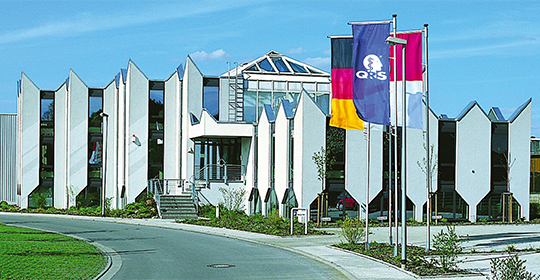
 The QRS therapy systems are manufactured by a medical device manufacturer in Germany with whom we have been associated for many years. As a long-standing system supplier for SIEMENS, our partner has a solid know-how base in medical technology as well as the corresponding quality management.
QRS the Original
QRS is the original and has been successfully active in the field of health for more then 30 years. Attempts have repeatedly been made to copy our technology, but these have not succeeded due to patent protection rights and our innovation advantage.
However, regardless of whether our technology is copied or not, we can rightfully claim that no device from any other manufacturer functions better than our systems. This becomes particularly evident in one essential point, the most important one for us: the result. So that the person who uses a magnetic field device or receives therapy has a real chance of improving their situation!
High-Intensity Magnetic Stimulation
The high-intensity product QRS 1010 Pelvicenter (rPMS), also known as magnetic stimulation or magnetic chair, uses strong magnetic impulses that are capable of reaching the deep muscle fibers of the pelvic floor. The passive yet significant muscle stimulation is superior to active muscle training for various reasons.
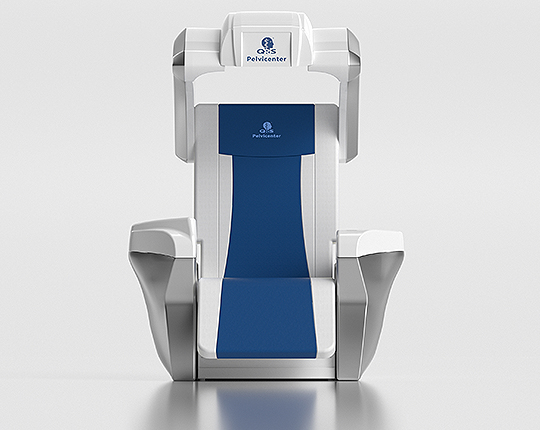
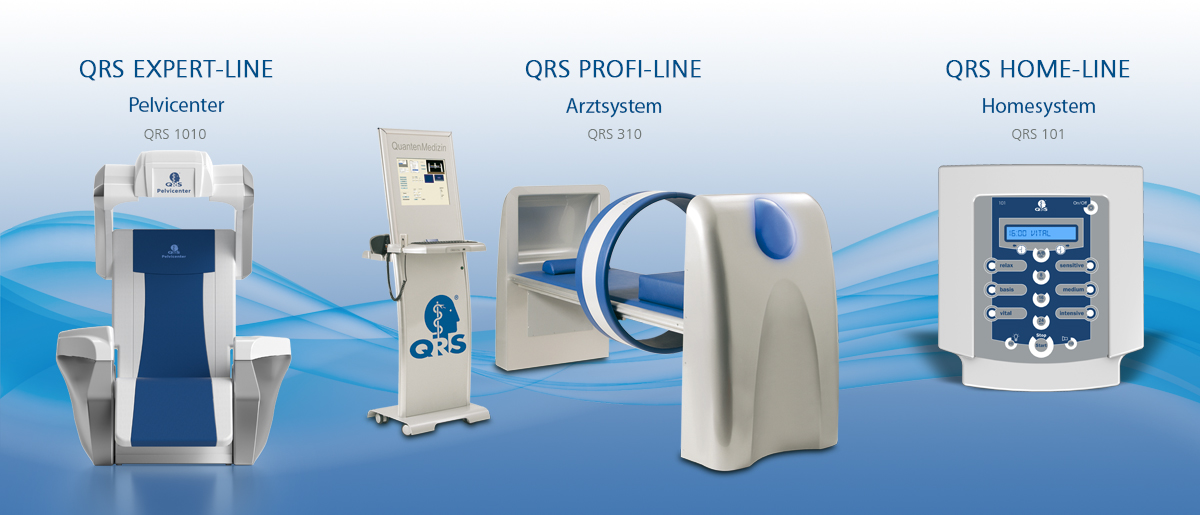
QRS 1010 Pelvicenter (high intensity)
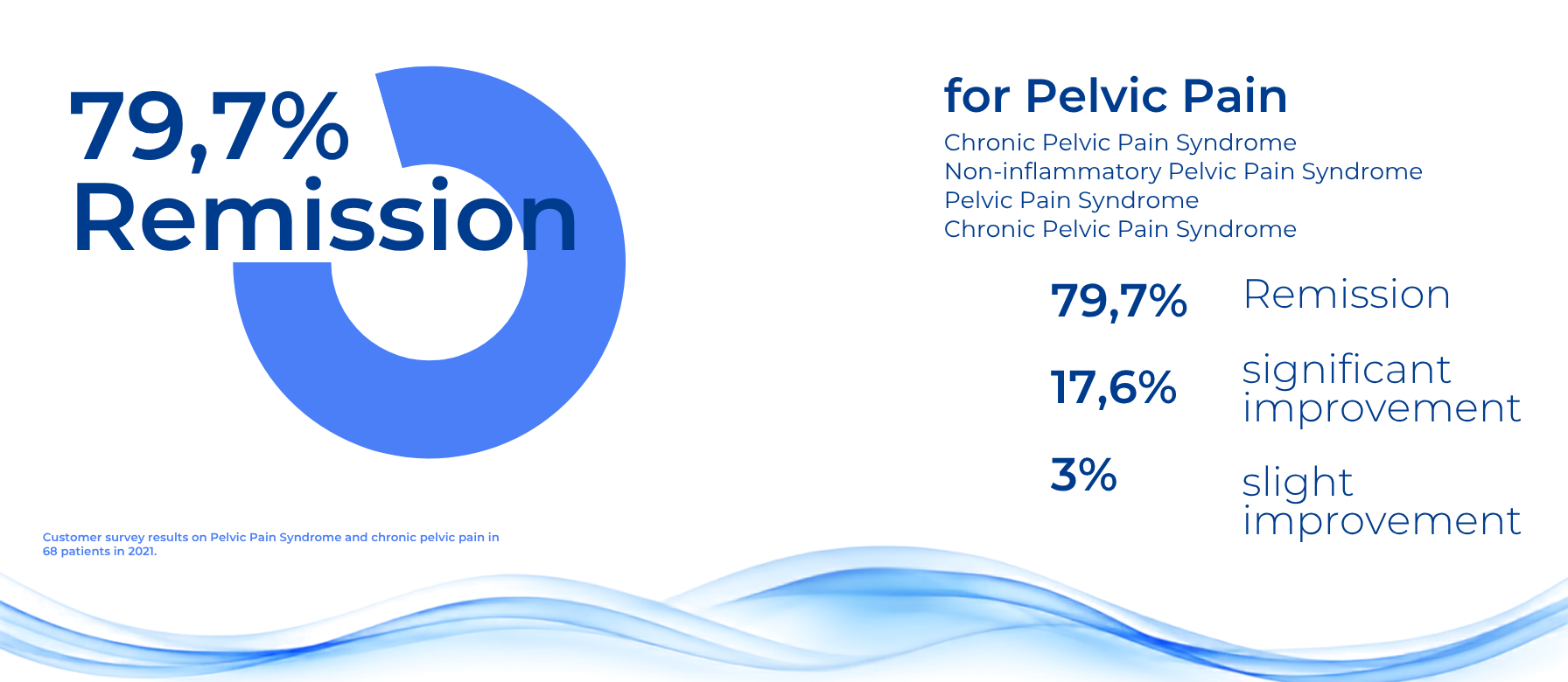
With 10 to 20 sessions on the QRS 1010 Pelvicenter, problems such as bladder weakness (urinary incontinence) and potency weakness (erectile dysfunction), as well as other indications caused by muscular problems in the pelvic floor area, can be treated. A treatment series also leads to the desired goal during post-pregnancy recovery training. Additional information for healthcare professionals can be found here: Pelvicenter.com.
Low-Intensity Magnetic Stimulation
The intention of the QRS systems in the low-intensity range is to achieve stimulation of cellular metabolism with all its positive subsequent effects.
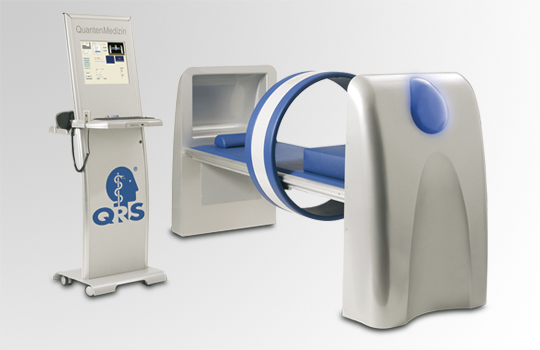
QRS 310 Physician System (low-intensity)
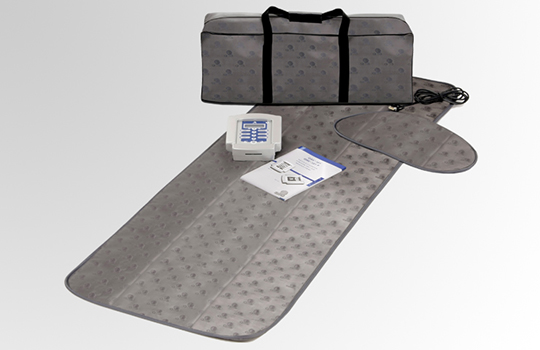
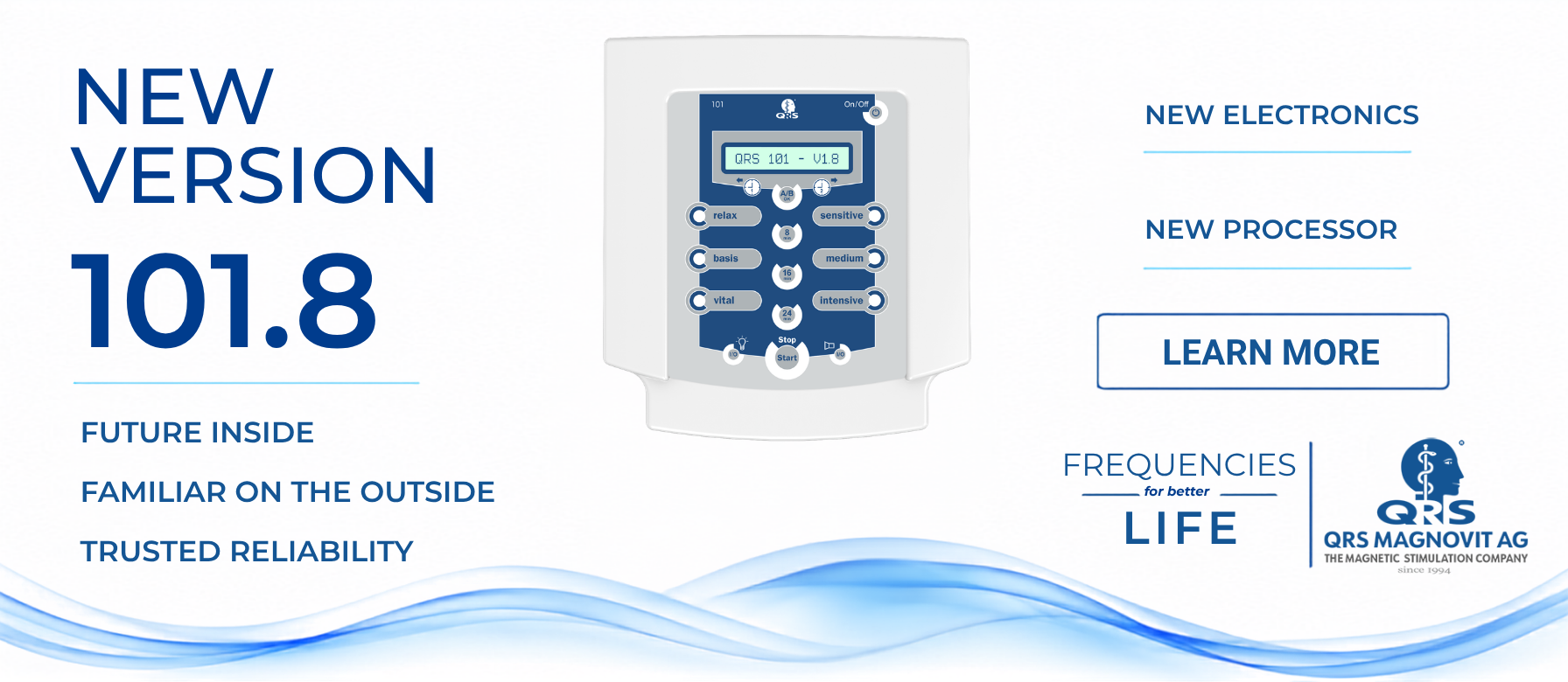
QRS 101 Home System (low-intensity)
For the low-intensity QRS systems (PEMF), it is not the strength of the magnetic field that matters, but the pulsating frequencies used and their signal sequences. The low-intensity product range includes the QRS 101 Home System and the QRS 310 Physician System. Additional information for healthcare professionals can be found here: QRS101.de.
Therapy-Supporting Systems
The combination of the QRS Pelvicenter with the QRS Biofeedback Trainer expands the options of a multimodally designed pelvic floor training program. The QRS Pelvicenter serves effective strength training, while the QRS Biofeedback Trainer improves the pelvic floor’s coordination.
The QRS Biofeedback Trainer is a pelvic floor training device that bioactively ‘scans’ and records the activities of the pelvic floor muscles through a special sensor integrated into the seat surface. The muscle movements are measured by the sensor during training and displayed visually on a screen.
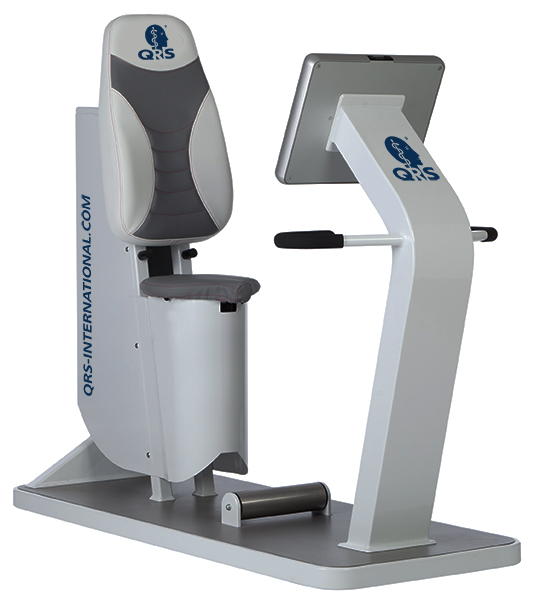
QRS Biofeedback Trainer
The patient constantly keeps the screen and the tasks displayed on it in view during training. For example, the basic training instructs the patient to follow a curve through targeted contraction, brief holding, and slow relaxation. The more accurately the patient performs this task, the better. As training progresses, conscious muscle contraction comes closer and closer to the specified target. Further information can be found on the product page: QRS Biofeedback Trainer.