Dr. Michael Zellner started his medical career as a urologist in 1988 at the Urology Clinic and Polyclinic of the Klinikum Großhadern of the Ludwig-Maximilians-University of Munich. His scientific focus there was on bladder dysfunction and erectile dysfunction of varied causes.
Until end of 1995, he was head of scientific working group “Urodynamics and Neurourology” and established one of the first specialized outpatient clinics for bladder dysfunction at the Klinikum Großhadern. The largely absent interest of medicine in the necessary differential diagnosis and treatment of bladder dysfunction, and the intensive surgical involvement with radical surgical interventions — above all radical prostatectomies and cystectomies — made the importance and necessity of professional, specialty-specific urological rehabilitation increasingly clear.
In 1996, under his medical direction, the first clinic for specific urological rehabilitation was opened in Bad Griesbach im Rottal in Lower Bavaria. It developed very rapidly and successfully, so that on 01.07.2010 the further development as the Department of Urology | Neurourology at the Johannesbad Fachklinik Bad Füssing presented itself. Unchanged, patients with bladder and sexual function disorders, among others, continue to be treated there as outpatients and inpatients by a multiprofessional team of experienced specialist physicians for urology, specifically trained therapists, and nursing staff, according to a multimodal treatment concept.
For about eight years, the muscle stimulation of the pelvic floor region with the QRS Pelvicenter has been an integral part of this successful treatment concept. Decisive for the goal-oriented treatment of impaired bladder function is the isolated use of the pelvic floor musculature, both under stress conditions and in case of symptoms of the overactive bladder (pollakiuria = frequent bladder emptying, nocturia = nighttime urination, imperative (non-suppressible) urge to urinate, with or without urinary incontinence = involuntary urine loss (OAB syndrome = “overactive bladder” or overactive bladder syndrome, formerly urge incontinence or “irritable bladder”)).
To avoid misdirection in the central nervous system (“faulty feedback”), the simultaneous use of the frequently incorrectly deployed gluteal, thigh, and abdominal muscles (“auxiliary musculature”) must be avoided. However, these muscle groups are very frequently activated by those affected, since the existence and controlled use of the relevant pelvic floor musculature are unknown to them. For the learning and training of the targeted, coordinated use of the pelvic floor, initial adequate perception training is obligatory. This is ideally achieved through regular vaginal or rectal palpation by a therapist well-trained and experienced in this technique, throughout the entire and regularly performed active pelvic floor contraction training.
A similarly good effect on the perception of these important muscle groups is also achieved with the Pelvicenter. Without need to undress or be touched in the intimate area, the patient experiences the rhythmic contractions of the pelvic floor (= continuous perception training). Through regular application, the required increase in strength and endurance occurs (“bodybuilding” for the pelvic floor), without any particular physical exertion. The Pelvicenter can contribute to a (significant) alleviation or elimination of corresponding disorders.
Among other things, the high acceptance, effectiveness, and subjectively positive assessment of treatment with the Pelvicenter are continuously objectified as part of the quality assurance of the Department of Urology / Neurourology of the Johannesbad Fachklinik. The results have already been presented in the course of specialist conferences.
As a further, increasingly significant advantage of treatment with the Pelvicenter, Dr. Zellner sees the increasing scarcity of the cost-intensive “resource: human being”. Even now, there are not enough interested physicians and qualified therapists available for the sustainable treatment of bladder and sexual function disorders. Dr. Zellner sees in the consistent and sufficiently long treatment (approximately two sessions per week, a total of at least ten to fifteen applications) with the Pelvicenter a good possibility of conveniently and discreetly achieving alleviation or cure in many cases, even where no treatment has previously been desired or possible. If, after this treatment duration on the Pelvicenter, no satisfactory improvement in symptoms occurs, however, he advises without exception a referral to a specialist physician for urology, in order to uncover possible reasons and not to overlook potential risk factors.
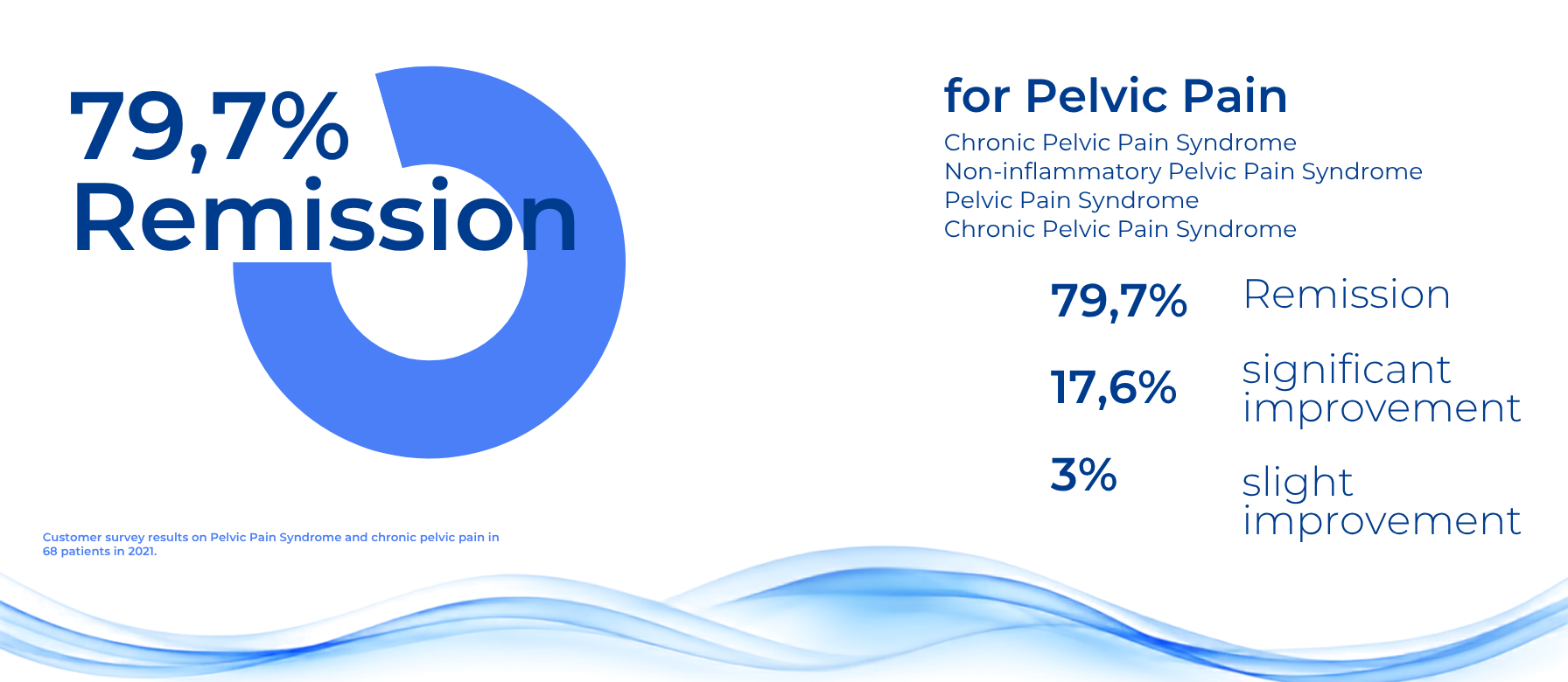
In addition, good results in chronic pain in the area of the lesser pelvis (“pelvic pain syndrome” = chronic pelvic pain syndrome) and erectile dysfunction can be achieved through QRS muscle stimulation. Clinical studies are currently in preparation, which are intended to scientifically underpin the effectiveness of the clinically observed treatment successes.
6 December 2017, © QRS-International AG